
Type II IVDD in Dogs: What it Means and How We Can Help
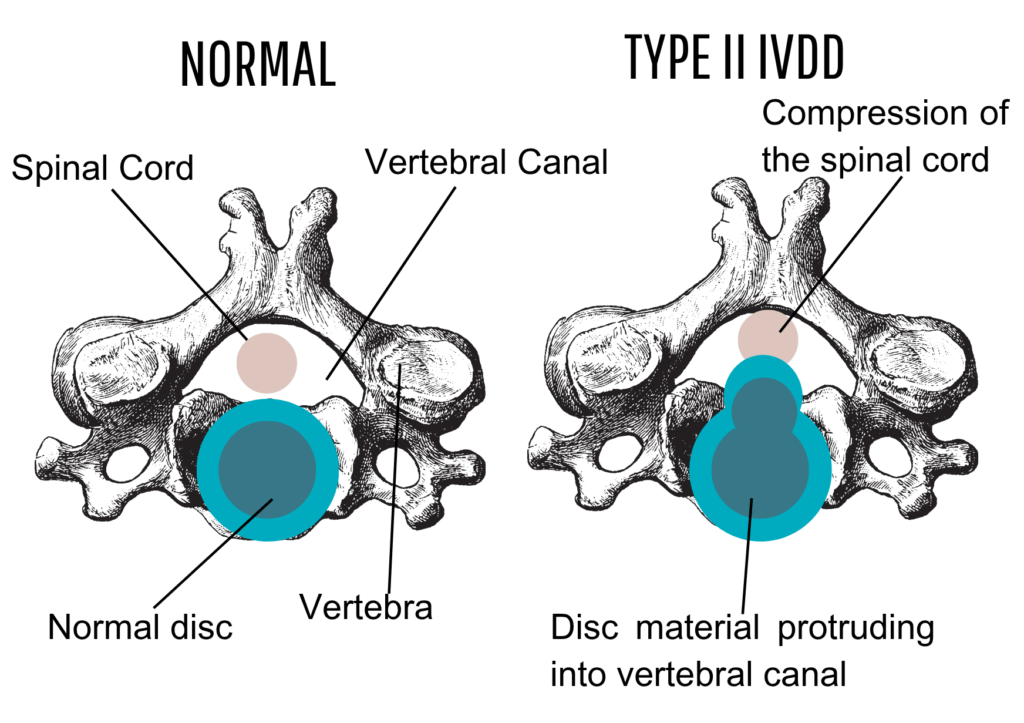
Intervertebral Disc Disease (IVDD) is a condition affecting the intervertebral discs (shock absorbers of the
vertebral column). Type II IVDD is a chronic, progressive degeneration of the intervertebral discs, commonly seen in middle-aged to older dogs. Unlike Type I IVDD, which involves sudden disc herniation, Type II IVDD develops gradually as the disc loses elasticity and thickens, compressing the spinal cord over time. This results in pain, mobility issues, and neurological dysfunction.
Signs and Symptoms to Watch Out For
Dogs with Type II IVDD might show signs like:
- A hunched (or “roached”) back
- Difficulty jumping or climbing stairs
- Trouble rising from lying down
- Muscle loss in the hind limbs
- Ataxia — a wobbly, uncoordinated walk
- Dragging a limb or paw
- Pain or stiffness, especially in the lower back
If you’re seeing any of these signs, it’s a good idea to speak with your vet
What Causes It?
Several things can contribute to Type II IVDD:
- Ageing and genetics – Common in middle-aged to older dogs; some breeds like Labradors and German Shepherds may be predisposed.
- Ongoing stress on the spine – From activities like repeated jumping, or from carrying extra weight.
- Loss of disc hydration – As dogs get older, the discs naturally lose water, which makes them less resilient.
- Progressive compression – The thickened disc slowly presses on the spinal cord, causing pain and neurological changes.
How Is It Diagnosed?
Type II IVDD is often diagnosed by your vet based on your dog’s:
- Clinical signs and medical history
- Neurological examination
- X-rays (will help in a presumptive diagnosis)
- Imaging such as MRI or CT (MRI is most definitive, though often more difficult to access)
Treatment Options
1. Surgical Options
Various surgeries may be performed, depending on the patient’s individual presentation
- Decompressive surgeries – Removes part of the verebra to increase space in the vertebral canal, thereby decreasing compression on the spinal cord – includes, hemilaminectomy; dorsal laminectomy and corpectomy
- Fenestration and nucleotomies – Removal of part of the intervertebral discs
2. Conservative Management
Surgical intervention is not always necessary, or possible. Many dogs with IVDD can be managed effectively with a combination of veterinary physiotherapy and lifestyle adjustments.
Exercise Modification
Maintain controlled exercise routines to prevent stress on the spine.
Daily walks on stable, non-slippery surfaces – try walking your dog over different surfaces in order to increase sensory input through their feet
Avoid High-Impact Activities – Limit jumping on and off furniture or excessive rough play
Veterinary physiotherapists can recommend tailored exercise plans.
Environmental Modification
- Use ramps instead of stairs
- Use orthopedic bedding to minimize stress on the spine.
- Use non-slip flooring to reduce the risk of falls.
Weight Management
Keeping your dog at a healthy weight reduces strain on the spine.
Excess fat contributes to inflammation, worsening pain and degeneration.
Medical Management
Follow your vet’s recommendations regarding medication, supplements, and anti-inflammatory
treatments.
Symptom Monitoring
Watch for worsening signs, or changes in presentation such as difficulty rising, reluctance to move, or loss of coordination, and seek veterinary attention promptly.
Can My Dog’s Proprioception Improve?
Absolutely. While spinal compression can reduce limb awareness (proprioception), the nervous system has an amazing ability to adapt. Through targeted exercises, we can help re-train your dog’s brain to “remember” where their paws are and move with more control.
Even small improvements can lead to better balance, confidence, and a much happier dog.
What’s the Long-Term Outlook?
Every dog is different, but many with Type II IVDD go on to live full, happy lives with the right care.
✔ Some dogs stabilise
✔ Some improve
✔ Some may need ongoing support as things change
With a good veterinary physiotherapy plan, we aim to:
- Slow down progression
- Prevent flare-ups
- Keep your dog comfortable, active, and independent for as long as possible
To find out more how veterinary physiotherapy improved the life of a real patient with IVDD, read Molly’s story